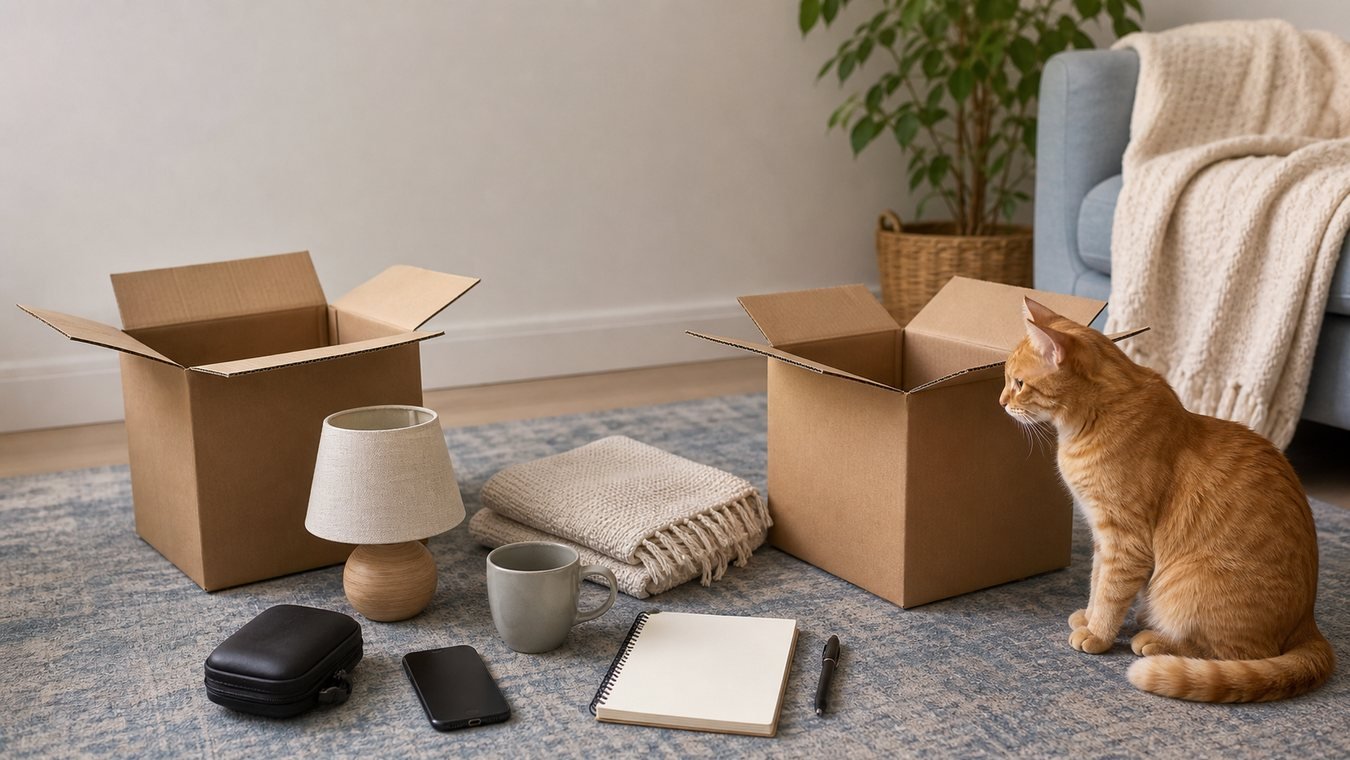
This moving inventory checklist turns a room full of loose belongings into a record you can use before packing, during delivery, and after unpacking. The aim is not to describe every fork and sock. It is to connect useful photos with a short item list and numbered boxes while everything is still visible.
Life Admin Checklist is an independent information site. This guide offers a practical recordkeeping method, not insurance, legal, or claims advice. Coverage and mover procedures vary, so check the rules that apply to your move.
Decide what your record needs to answer
Start with the questions you may need to answer later: What was in the room? Which box received it? What condition was a notable item in before packing? Did that box arrive? A compact record built around those questions is easier to finish than an ambitious catalog.
| Record | Useful detail |
|---|---|
| Room overview | Wide photos before anything is packed |
| Notable item | Plain description, condition, and serial number when relevant |
| Box | Unique box number and destination room |
| Files | Photo names that match the room or box number |
| Verification | Arrival and unpacking result |
The National Association of Insurance Commissioners home inventory page recommends capturing pictures, grouping belongings by room or category, and keeping an exportable inventory. This moving inventory checklist uses the same basic idea but adds box tracking for a move.
Prepare one simple naming system
Choose room abbreviations and number boxes before the first roll of tape. For example, use KIT-01 for the first kitchen box and BED-01 for the first bedroom box. Put the code on more than one side so it remains visible in a stack. Avoid writing a detailed list of valuables on the outside.
- Phone or camera with enough charge and storage
- Plain box labels or a dark marker
- A note, spreadsheet, or inventory app you already understand
- A private folder for photos and supporting files
- Receipts or model details you already have for selected items
Keep sensitive records separate from the moving crew’s paperwork. The moving documents folder checklist can help you decide what should travel with you instead of inside a box.
Photograph the room before packing
Take a slow set of wide photos while furniture, shelves, closets, and storage areas are still visible. Then photograph selected groups or items that would be difficult to identify from the wide view. The Texas Department of Insurance suggests pictures or video of each room, opening closets and drawers, recording relevant serial numbers, and remembering areas such as a garage or shed.
Use that advice proportionately. Do not photograph account papers, passwords, medication labels, keys in identifying detail, or identity documents just because they happen to be in the room. Move those to a private carry folder first.
Run the moving inventory checklist box by box
- Assign the box code. Enter it in your note before filling the box.
- Write a short contents summary. “Everyday cookware and tea towels” is often enough; list individual items only when the detail has a purpose.
- Capture one open-box photo. Keep the code visible beside the box without exposing private paperwork.
- Note selected condition details. Photograph an existing scratch or dent on a notable item before wrapping it.
- Close and label the box. Add the destination room and any handling note that is genuinely needed.
- Mark who carries it. Distinguish boxes going with movers, in your vehicle, into storage, or to donation.
This sequence keeps the moving inventory checklist attached to real containers instead of becoming a separate list you cannot reconcile at the new address.
Make a short record for unboxed items
Furniture, bicycles, lamps, and other unboxed pieces need their own entries. Use a plain description, the starting room, one overview photo, and closer photos of any existing wear worth distinguishing. Record a serial or model number only when it helps identify the item, and keep the number in the private file rather than on an exterior tag.
A property-condition record serves a different purpose. If you are also documenting walls, floors, fixtures, or appliances supplied with a rental, use the apartment move-in inspection checklist rather than mixing landlord property with your household inventory.
Save two usable copies
A record stored only on the phone riding in the moving truck is a fragile record. After each major room—or at the end of the day—copy the inventory to a second secure location you can reach independently. Ready.gov advises storing important documents on an external drive or in cloud storage for access during an emergency. The Texas Department of Insurance likewise recommends keeping a home inventory safe, current, and away from the home or online.
Use access controls appropriate to the information you saved. Do not publish the folder, place a public link on a label, or email a complete inventory to unrelated parties. If an app offers an export, test the export now rather than assuming it will work later.
Verify at delivery without unpacking everything
Count by box code as items enter the new home. Mark a box “arrived” only when you can see its code, not when someone estimates that the stack is complete. Note visible exterior damage before moving the box farther, then follow the mover’s or carrier’s current reporting process if needed.
| Status | What to record |
|---|---|
| Arrived | Date and box code seen |
| Exterior concern | Photo, time, and where the box was noticed |
| Not located | Last confirmed stage and who is checking |
| Unpacked | Result and any follow-up actually submitted |
Keep observations factual. This moving inventory checklist can organize evidence, but it does not determine responsibility, coverage, value, or the outcome of a claim.
Troubleshoot the record, not your memory
- A box has no number: assign the next unused code and photograph it before it moves again.
- Two boxes share a code: add A and B, then update both the labels and your note.
- Photos are hard to match: rename copies with the room and box code; preserve the originals.
- A file will not open: create a fresh export from the working source and test the second copy.
- An item is missing from the list: add a dated note rather than silently rewriting the earlier record.
Final moving inventory checklist
- Choose room abbreviations and unique box numbers.
- Take wide room photos before packing.
- Record selected serial numbers and existing condition details privately.
- Link each packed-box photo to its box code.
- Separate mover, personal-vehicle, storage, and donation items.
- Save and test a second secure copy.
- Count visible box codes at delivery.
- Preserve original files and date any later notes.
A finished moving inventory checklist should be boring to use: find the room, find the box code, open the matching photo, and record what happened. That small structure is more valuable than a perfect list abandoned halfway through packing.