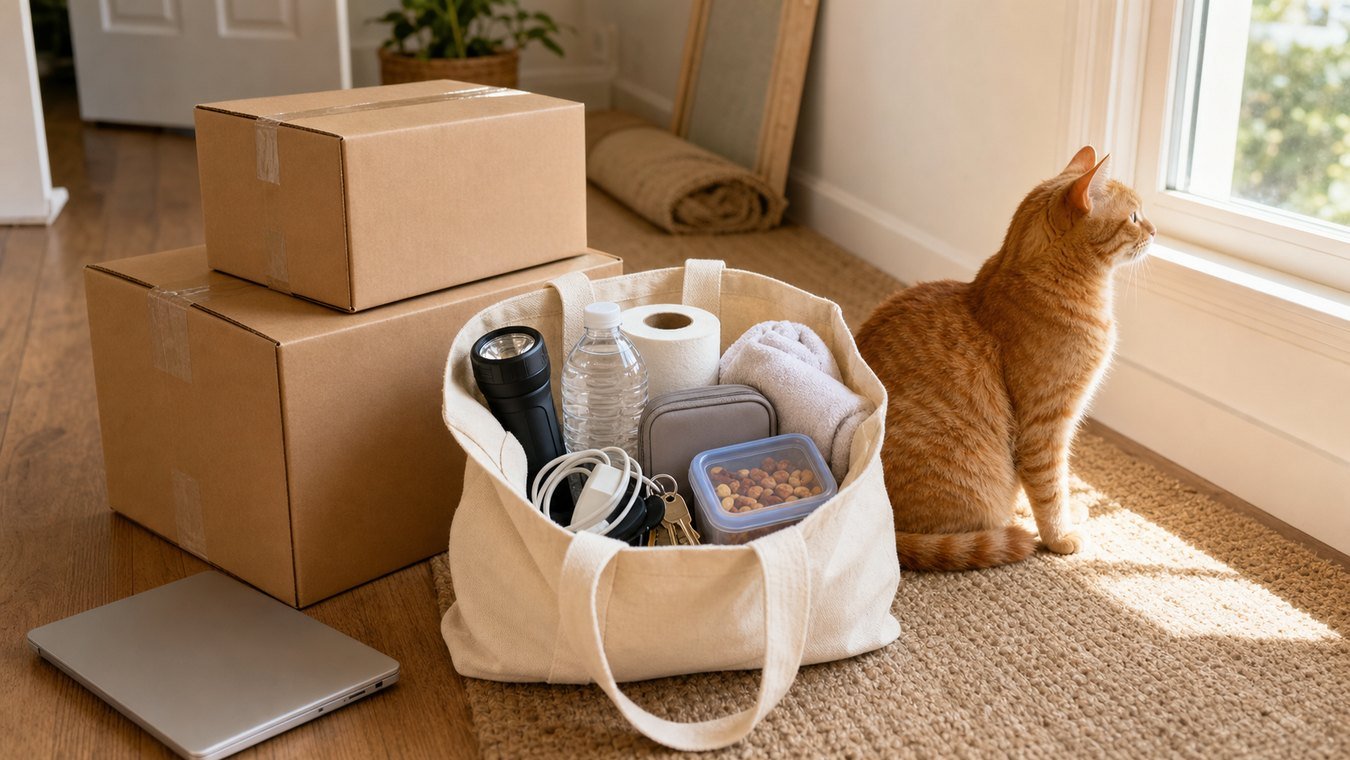
This moving day essentials checklist keeps the things you may need before the first box is opened in one reachable place. It is not a second household inventory. It is a short access plan for keys, power, water, personal care, basic safety, and the first few hours in an unfamiliar home.
Life Admin Checklist is an independent information site. This article is a practical packing method, not emergency, medical, or moving-company advice. Adjust it for your household, route, weather, building rules, and individual needs.
Decide what must stay within reach
Use three destinations instead of labeling everything “essential.”
| Destination | What belongs there | Access rule |
|---|---|---|
| With you | Keys, phone, wallet, necessary medication, critical contacts, and irreplaceable records | Never load it into a moving truck |
| Open-first tote | Chargers, water, simple food, hygiene items, flashlight, towel, basic first aid, and pet supplies | Last into your vehicle; first out |
| Ordinary boxes | Items that can wait until unloading is organized | Label by room or your box-number system |
This split is the core of the moving day essentials checklist. If an item would create an immediate access problem when packed behind furniture, it needs a better destination. For important papers, use the separate moving documents folder checklist rather than mixing loose records with snacks and toiletries.
Pack the open-first tote by job
A small tote is easier to find than several vaguely marked boxes. The list below is a starting point, not a fixed shopping list.
Arrival and access
- Old and new keys, fobs, parking instructions, and access codes stored securely.
- Charged phone, wall charger, vehicle charger, and a power bank if you already use one.
- New address and a short contact list available without relying on one app.
- Flashlight with working batteries for dark closets, hallways, or a late arrival.
- A pen, small notepad, and plain tape for quick labels or notes.
Water, food, and personal care
- Drinking water and simple food suited to the people traveling.
- Necessary medication and medical items kept under the control of the person who uses them.
- Toilet paper, soap, hand sanitizer, tissues, trash bags, and a towel.
- A change of clothes, sleepwear, and weather-appropriate layers.
- Glasses, contact supplies, hearing-device supplies, or other daily-use items.
Ready.gov’s emergency kit guidance groups water, food, a flashlight, first aid, sanitation items, phone chargers, documents, and household-specific supplies in easy-to-carry containers. The American Red Cross kit list likewise separates basic supplies from individual needs. A moving tote is not a full emergency kit, but those categories are useful prompts when part of the home is inaccessible.
First-room setup
- Basic first-aid supplies you already know how to use.
- Cleaning cloths or wipes for one immediate surface.
- Scissors or a box opener, packed closed and handled safely.
- Bed linens or a clearly identified bedding bundle.
- One cup, plate, and set of utensils per person if needed before kitchen boxes open.
Household-specific needs
Finish this part of the moving day essentials checklist person by person. Add infant supplies, mobility items, sensory supports, climate-specific gear, or anything else that cannot wait behind a stack of boxes. For a pet, keep an appropriate carrier or leash, food, water, bowl, waste supplies, current identification details, and any needed medication accessible. Requirements and safe travel arrangements vary by animal and route.
Keep evidence separate from supplies
Do not bury the administrative record at the bottom of the tote. Keep a small paper or offline note with:
- the new address and access contact;
- the utility start date or confirmation you actually received;
- the mover or rental-vehicle contact and reference number;
- box counts or the link to your inventory;
- photos of the empty old home and the new home before unloading, when appropriate.
The utility transfer checklist helps track service separately. Use the moving inventory checklist for boxes, room photos, and arrival results. The essentials tote should point to those records, not become another unstructured archive.
Load in reverse access order
Complete the moving day essentials checklist before the vehicle is full:
- Choose one container. Use a tote, backpack, or small bin that one person can carry.
- Add a visual marker. Pick a distinctive color or ribbon without writing personal details outside.
- Name a custodian. One adult knows where the tote is at every handoff.
- Photograph the packed contents. Keep the image private and avoid exposing sensitive records.
- Load it last. Put it where it can be removed without shifting furniture or opening a truck.
- Keep the personal carry bag separate. Wallets, identity documents, keys, and necessary medication should not be handed off as ordinary cargo.
Moving day essentials checklist: run two quick checks
Before leaving
- Test both sets of keys and confirm who holds them.
- Check phones, chargers, and the destination address.
- Count people, personal bags, the essentials tote, and pet carriers.
- Confirm that nothing sensitive is visible in an unattended vehicle.
At the new home
- Place the tote in one named room, away from the unloading path.
- Confirm entry, lighting, water availability, and any service result you can safely check.
- Set up the immediate hygiene, pet, and sleep basics before opening low-priority boxes.
- Record a missing or damaged box in the inventory instead of relying on memory.
These checks turn the moving day essentials checklist into a handoff record: packed, carried, placed, and verified.
If the tote is missing or incomplete
- It went into the truck: do not climb into an unsafe load. Ask the person controlling the unload when it can be reached.
- The charger does not fit: conserve battery and use the vehicle or backup option you packed, if compatible.
- Utilities are not available: check the provider confirmation and contact the provider or property contact; do not attempt electrical, gas, or water repairs yourself.
- A necessary personal item is missing: prioritize the person’s immediate needs and use the appropriate professional, pharmacy, property, or service contact rather than improvising.
- The tote is too heavy: move documents and personal items to a carry bag, then divide ordinary supplies into two clearly paired containers.
Close the moving day essentials checklist after the first night by returning keys and records to secure storage, charging devices, replacing used supplies, and noting anything worth packing differently next time.