Reviewed: August 8, 2026
A new home fire safety checklist helps you find alarms, exits, and building instructions before moving boxes become part of the floor plan. Walk the home once, test what is already installed, map a way out, save the details that belong with the property, and repeat the check with everyone who lives there.
Life Admin Checklist is an independent information site. Fire codes, landlord duties, building systems, alarm types, and maintenance responsibilities vary. Follow current local requirements, your lease or building instructions, and each device manufacturer’s directions. Contact the responsible property professional or local fire department when equipment or instructions are unclear.
Use this quick new home fire safety checklist
- ☐ Locate every smoke alarm without removing or disabling it.
- ☐ Record the alarm type, visible condition, and any manufacture or replacement information you can safely read.
- ☐ Test alarms as directed by the manufacturer or building manager.
- ☐ Check that doors, windows, halls, and stairs used for escape are usable and not blocked by boxes.
- ☐ Draw the rooms, doors, and windows; identify two ways out of each room where possible.
- ☐ Choose an outside meeting place and review it with the household.
- ☐ Save building-specific emergency instructions and the correct maintenance contact.
- ☐ Practice the route, then schedule the next alarm check.
1. Do a no-tools walk-through first
Start before unpacking spreads through the home. Carry your phone and look from room to room without opening, disconnecting, painting, or moving any installed device. Add each alarm to a short room list: main bedroom, other sleeping rooms, hall outside sleeping areas, each level, and basement if the home has one.
The U.S. Fire Administration (USFA) advises installing smoke alarms inside every bedroom, outside each separate sleeping area, and on every level of the home, including the basement. Treat that as federal safety guidance, not a substitute for local code or a building inspection. If your room list appears incomplete, record the gap and ask the landlord, property manager, owner, licensed professional, or local fire department who should assess it.
Take a clear photo of each alarm in place and any safely visible date or model information. Keep those photos separate from the condition photos in your apartment move-in inspection checklist; this small alarm record is easier to revisit than a long room-by-room gallery.
2. Test what is installed without guessing
Your new home fire safety checklist should distinguish “present” from “working.” USFA says a smoke alarm works only when properly installed and regularly tested, and recommends following the manufacturer’s instructions. Its general maintenance guidance says to test smoke alarms monthly, while battery and replacement steps differ by alarm type.
- Before testing: tell people nearby and check building instructions, especially in a monitored or shared system.
- During testing: use the device’s test method. Do not use a flame, smoke, or improvised tool.
- After testing: note the date, result, location, and person or maintenance channel contacted if the alarm did not respond.
Do not assume every round ceiling device is the same. A smoke alarm, carbon-monoxide alarm, heat alarm, sprinkler component, and building detector can have different functions and service rules. If the label is unreadable or the system is interconnected, stop rather than dismantling it.
USFA also says smoke alarms need replacement 10 years from the manufacture date, but device instructions and local rules still matter. An unknown date is a question to document, not permission to replace building equipment yourself.
3. Map the route in your new home fire safety checklist
Now switch from devices to movement. USFA’s home fire escape planning guidance says to draw a map with doors and windows, find two ways out of every room, keep doors and windows unblocked, choose an outside meeting place, and practice with everyone in the home.
Sketch only what helps someone act. Mark bedrooms, ordinary exits, windows that may serve as an alternate route, stairs, and the meeting point. Walk each planned path and remove cartons, cords, or furniture that narrow it. Check whether a window actually opens without forcing it and whether everyone can operate the doors they may need.
Apartment and high-rise residents should save the building’s own emergency information. USFA tells high-rise residents to know exit-stair locations, use stairs rather than elevators unless the fire department directs otherwise, leave the apartment, and close the door behind them. Building instructions may add alarm, accessibility, refuge-area, or assembly details, so keep the current resident notice with your moving documents folder.
4. Turn the map into a household plan
A paper route is not finished until the people in the home understand it. Add names only where they help: who will assist a child, older adult, visitor, or household member who may need help; who will bring a phone only if it is immediately reachable; and who will account for the household at the meeting place. Never assign someone to delay their own exit to collect possessions.
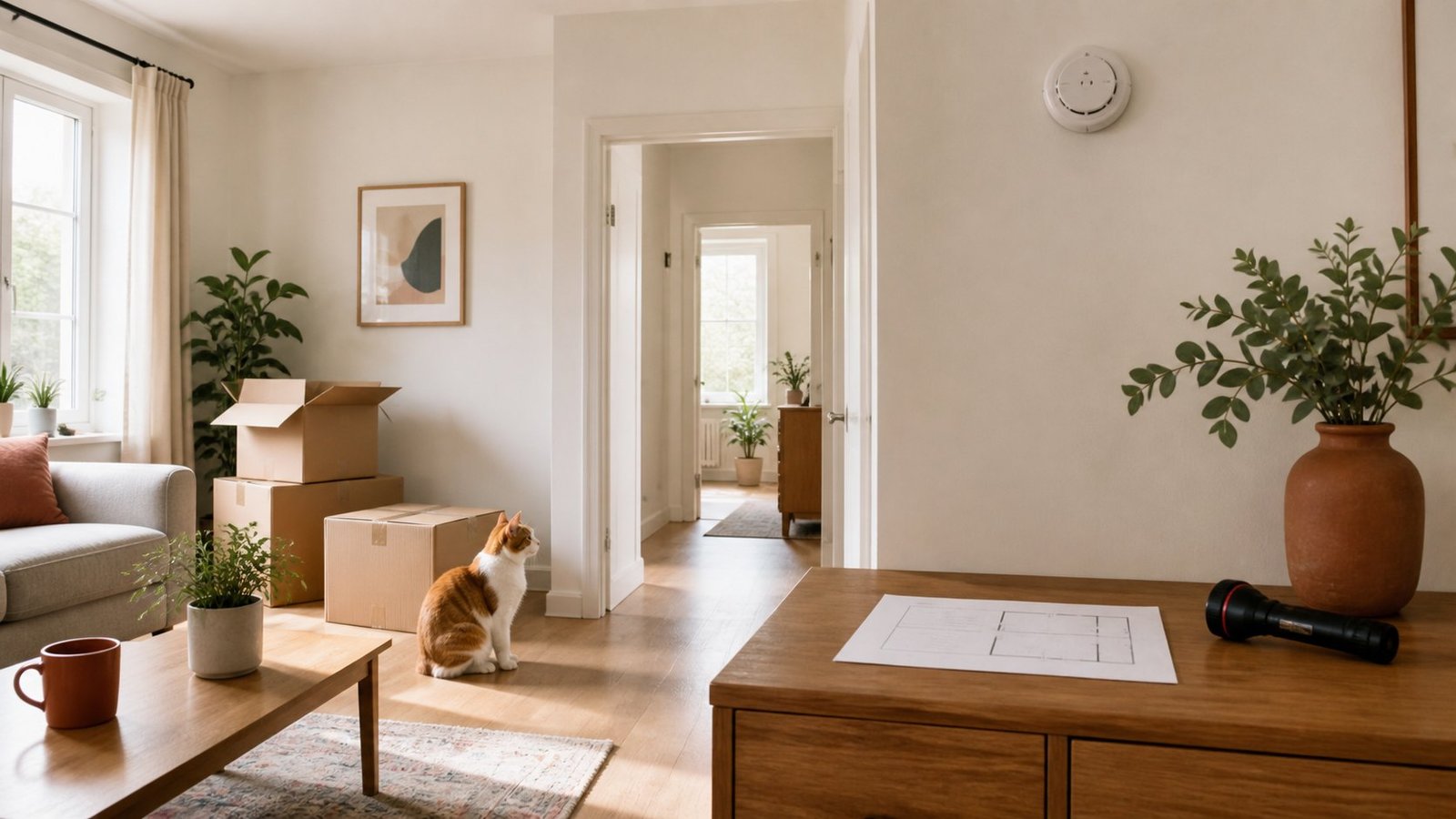
Include pets in preparation without planning a dangerous re-entry. Keep carriers, leashes, and current identification where they are normally accessible, but the safe response during a real fire belongs to emergency professionals. The exactly one cat in this article’s photo is part of the moving scene, not a demonstration of an evacuation method.
Run one calm practice after the routes are clear. USFA suggests using the smoke alarm test button to begin a home fire drill, then going outside to the meeting place. In a multifamily building, confirm whether a test could affect a monitored system before pressing anything.
5. Save a one-page new home fire safety checklist record
Keep the administrative part of the new home fire safety checklist short enough to maintain:
- alarm locations and last test date;
- visible manufacture or replacement dates, without removing devices;
- the building or maintenance contact for faults;
- the source and date of the emergency instructions you saved;
- two planned routes from sleeping rooms where available;
- the outside meeting place; and
- the next monthly reminder to test alarms according to current instructions.
Store a copy where household members can find it, not only in one person’s private account. Link the meeting point and contacts to your broader emergency plan update checklist so the address, contacts, and routes do not drift apart.
When the new home fire safety checklist finds a problem
- An alarm does not respond: follow the device or building instructions and report it through the responsible maintenance path. Do not leave the issue as an unlabeled phone photo.
- The alarm chirps: consult the manufacturer or building instructions; chirps can have different meanings. Record what you tried and whether service is still needed.
- A route is blocked: move your belongings immediately if they caused the obstruction. Report shared-hall, locked-exit, or building-access concerns to the responsible contact rather than altering building hardware.
- You cannot identify two usable ways out: do not invent a route. Ask the building manager or local fire department for location-specific guidance and note the answer.
- Instructions conflict: preserve the current notice and ask the responsible building contact or local authority which instruction applies to your address.
Final verification
Finish the new home fire safety checklist by confirming four things: alarms are mapped and tested as directed, routes are clear, everyone knows the meeting place, and fault reports have a saved confirmation. Recheck after major furniture changes, household changes, or updated building instructions rather than treating move-in day as the final review.